
🎯 今日目标
- 💻 目标1:完成 7 道 题目。
- 📚 目标2:复习算法知识点(拓扑排序,最短路)。
🕒 学习与练习计划
| ⏰ 时间段 | 📘 内容 | 🎯 目标 |
|---|---|---|
| 13:40-17:40 | 📝 复习拓扑排序并刷最短路(Dijkstra)题目 | 学 |
✅ 完成情况
- 今日目标完成情况:
- ✅ 完成:完成 6 道题目。
蓝桥云课
- 神经网络 - 拓扑排序[中等🟠]
- Dijkstra求最短路1 - Dijkstra[中等🟠]
- 旅行的截止日期 - 有限制的Dijkstra[中等🟠]
- 欧涛最短路 - Dijkstra(一遍过)[困难🔴]
洛谷
💡 解题思路与总结
题目1.神经网络
- 解题方法:拓扑排序
- 遇到的问题:我以为非输入层就是输出层,在输入数据时就判了,非活动层的权值*阈值也加上了
- 解决方案:非输入层!=输出层,节点后没有子节点的才是输出层

cpp
#include<bits/stdc++.h>
#define int long long
#define PII pair<int,int>
#define ULL unsigned long long
#define all(v) v.begin(), v.end()
#define debug(a) cout<<#a<<"="<<a<<endl;
using namespace std;
constexpr int N =  1 * 1e6 + 10,M = 5 * 1e3 + 10,inf = 0x3f3f3f3f;

int n,p;
int U[N],in[N],C[N];
bool isout[N];
struct edge
{
    int to,w;
};
vector<edge> G[M];
void solve()
{
    cin >> n >> p;
    queue<int> q;
    for(int i=1;i<=n;i++)
    {
        cin >> C[i] >> U[i];
    }
    for(int i=1;i<=p;i++)
    {
        int u,v,w;
        cin >> u >> v >> w;
        G[u].push_back({v,w});
        in[v] ++;
    }
    for(int i=1;i<=n;i++)
    {
        if(!in[i])
        {
            q.push(i);
            U[i] = 0;
        }
        if(G[i].size() == 0) isout[i] = true;
    }
    while(q.size())
    {
        int u = q.front();
        q.pop();
        for(auto [v,w] : G[u])
        {
            if(C[u] > 0)
            C[v] += w * C[u];
            if(--in[v] == 0)
            {
                C[v] -= U[v];
                q.push(v);
            }
        }
    }
    bool f = false;
    for(int i=1;i<=n;i++)
    {
        if(C[i] > 0 && isout[i]) {
            cout << i << ' ' << C[i] << '\n';
            f = true;
        }
    }
    if(!f) cout << "NULL";
}
signed main()
{
    ios::sync_with_stdio(0);cin.tie(nullptr),cout.tie(nullptr);
    int _=1;
    // cin>>_;
    while(_--)
    {
        solve();
    }
    return 0;
}

/**
 *    author: Nijika_jia
 *    created: 2025.02.08 13:50:04
*/题目2.Dijkstra求最短路1
- 解题方法:Dijkstra
- 遇到的问题:本来是很简单的一个板子题,但总是错一个,没想到是memset配合#define int long long的问题
- 解决方案:给数组memset值为0x3f的时候求你们一定要去掉#define int long long,下面是来自ai的解答
 吓得我感觉给我的代码片段加上了这个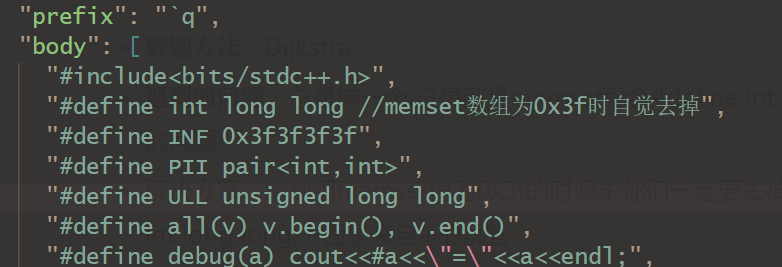
cpp
#include<bits/stdc++.h>
// #define int long long
#define INF 0x3f3f3f3f
#define PII pair<int,int>
#define ULL unsigned long long
#define all(v) v.begin(), v.end()
#define debug(a) cout<<#a<<"="<<a<<endl;
using namespace std;
constexpr int N =  1 * 1e6 + 10,M = 5 * 1e3 + 10;

int n,m;
vector<PII> G[M];
int dist[N];
bool st[N];
int dj()
{
    memset(dist,0x3f,sizeof dist);
    priority_queue<PII,vector<PII>,greater<PII>> heap;
    heap.push({0,1});
    dist[1] = 0;
    while(heap.size())
    {
        auto [_,u] = heap.top();
        heap.pop();
        if(st[u]) continue;
        st[u] = 1;
        for(auto [v,w] : G[u])
        {
            if(dist[u] + w < dist[v])
            {
                dist[v] = dist[u] + w;
                heap.push({dist[v],v});
            }
        }
    }

    if(dist[n] == INF) return -1;
    return dist[n];
}
void solve()
{
    cin >> n >> m;
    while(m--)
    {
        int u,v,w;
        cin >> u >> v >> w;
        G[u].push_back({v,w});
    }

    cout << dj() << '\n';
}
signed main()
{
    ios::sync_with_stdio(0);cin.tie(nullptr),cout.tie(nullptr);
    int _=1;
    // cin>>_;
    while(_--)
    {
        solve();
    }
    return 0;
}

/**
 *    author: Nijika_jia
 *    created: 2025.02.08 15:40:25
*/题目3.旅行的截止日期
- 解题方法:Dijkstra + 特判(限制了扩展最短的路的策略) 太简单了,一遍过
cpp
#include<bits/stdc++.h>
// #define int long long
#define INF 0x3f3f3f3f
#define PII pair<int,int>
#define ULL unsigned long long
#define all(v) v.begin(), v.end()
#define debug(a) cout<<#a<<"="<<a<<endl;
using namespace std;
constexpr int N =  1 * 1e5 + 10,M = 5 * 1e3 + 10;

int n,m;
struct edge
{
    int to,k,w;
};
vector<edge> G[N];
int dist[N];
bool st[N];
string dj(int s,int t,int limt)
{
    memset(dist,0x3f,sizeof dist);
    priority_queue<PII,vector<PII>,greater<PII>> heap;
    heap.push({0,s});
    dist[s] = 0;
    while(heap.size())
    {
        auto [d,u] = heap.top();
        heap.pop();
        if(st[u]) continue;
        st[u] = 1;
        for(auto [v,k,w] : G[u])
        {
            if(dist[u] + w < dist[v] && d % k == 0)
            {
                dist[v] = dist[u] + w;
                heap.push({dist[v],v});
            }
        }
    }

    return dist[t] > limt ? "NO" : "YES";
}
void solve()
{
    int x,y,z;
    cin >> n >> m >> x >> y >> z;
    while(m--)
    {
        int u,v,k,w;
        cin >> u >> v >> k >> w;
        G[u].push_back({v,k,w});
    }

    cout << dj(x,y,z) << '\n';
}
signed main()
{
    ios::sync_with_stdio(0);cin.tie(nullptr),cout.tie(nullptr);
    int _=1;
    // cin>>_;
    while(_--)
    {
        solve();
    }
    return 0;
}

/**
 *    author: Nijika_jia
 *    created: 2025.02.08 15:40:25
*/题目4.欧涛最短路
- 解题方法:预处理一下点与点之间的权值,连接每一个点(稠密图还在用堆优化Dijkstra竟然还能过)就是后面就是纯纯的Dijkstra,虽然还是有限制条件,而且还需要记录路径,用到了前驱数组倒推出路径
太简单了,一遍过 顺便推荐个网站,我做的时候稍微用了一下这个
3D Calculator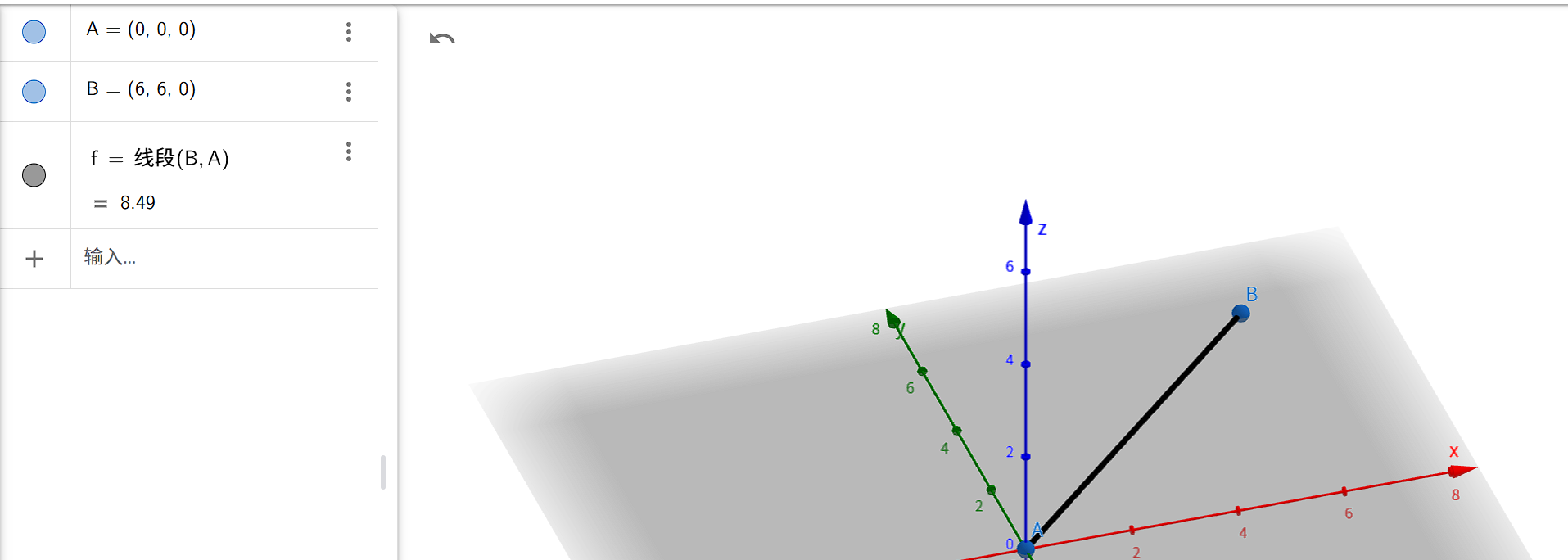 三维图一目了然,而且还可以算出点与点之间的距离(目前我只用到了这两个功能)
cpp
#include<bits/stdc++.h>
// #define int long long //memset数组为0x3f时自觉去掉
#define INF 0x3f3f3f3f
#define PII pair<int,int>
#define ULL unsigned long long
#define all(v) v.begin(), v.end()
#define debug(a) cout<<#a<<"="<<a<<endl;
using namespace std;
constexpr int N =  1 * 1e6 + 10,M = 5 * 1e3 + 10;

typedef pair<double,int> PDI;

int n;
double m;
double dist[N];
bool st[N];
int path[N];
struct node
{
    double x,y,z;
};
vector<pair<int,double>> G[N];
void Dijkstra()
{
    fill(dist , dist+ n + 10 , 1e18);
    memset(path,-1,sizeof path);
    priority_queue<PDI,vector<PDI>,greater<PDI>> heap;
    dist[0] = 0;
    heap.push({0,0});
    while(heap.size())
    {
        auto [d,u] = heap.top();
        heap.pop();
        if(st[u]) continue;
        st[u] = 1;
        for(auto [v,w] : G[u])
        {
            if(dist[u] + w < dist[v] && w <= m)
            {
                dist[v] = dist[u] + w;
                path[v] = u;
                heap.push({dist[v],v});
            }
        }
    }
    if(dist[n+1] == 1e18) printf("-1\n");
    else
    {
        auto getpath = [](){
            vector<int> t;
            for(int i=n+1;~i;i=path[i]){
                t.push_back(i);
            }
            reverse(all(t));
            return t;
        };
        auto p = getpath();
        printf("%.3lf\n",dist[n+1]);
        for(auto x : p)
        {
            if(x == 0) printf("Start ");
            else if(x == n+1) printf("End");
            else printf("%d ",x);
        }
    }
}
void solve()
{
    double x1,y1,z1,x2,y2,z2;
    cin >> n >> m;
    cin >> x1 >> y1 >> z1 >> x2 >> y2 >> z2;
    vector<node> point;
    point.push_back({x1,y1,z1});
    for(int i=1;i<=n;i++)
    {
        double a,b,c;
        cin >> a >> b >> c;
        point.push_back({a,b,c});
    }
    point.push_back({x2,y2,z2});
    auto dis = [](double x1,double x2,double y1,double y2,double z1,double z2){
        return sqrt(pow(x1-x2,2) + pow(y1-y2,2) + pow(z1-z2,2));
    };
    for(int i=0;i<point.size();i++)
    {
        for(int j=0;j<point.size();j++)
        {
            if(i == j) continue;
            auto [x1,y1,z1] = point[i];
            auto [x2,y2,z2] = point[j];
            G[i].push_back({j,dis(x1,x2,y1,y2,z1,z2)});
        }
    }

    Dijkstra();
}
signed main()
{
    ios::sync_with_stdio(0);cin.tie(nullptr),cout.tie(nullptr);
    int _=1;
    // cin>>_;
    while(_--)
    {
        solve();
    }
    return 0;
}

/**
 *    author: Nijika_jia
 *    created: 2025.02.08 16:37:43
*/题目5.营救
- 解题方法:读懂题再做
- 遇到的问题:是路径上遇到的每个权值的最小的最大的权值,而不是所有路径相加的最小值
- 解决方案: 节点与节点的松弛策略改一下就行
cpp
#include<bits/stdc++.h>
// #define int long long
#define INF 0x3f3f3f3f
#define PII pair<int,int>
#define ULL unsigned long long
#define all(v) v.begin(), v.end()
#define debug(a) cout<<#a<<"="<<a<<endl;
using namespace std;
constexpr int N =  2 * 1e6 + 10,M = 5 * 1e3 + 10;

int n,m;
vector<PII> G[N];
int dist[N];
bool st[N];
int dj(int s,int t)
{
    memset(dist,0x3f,sizeof dist);
    priority_queue<PII,vector<PII>,greater<PII>> heap;
    heap.push({0,s});
    dist[s] = 0;
    while(heap.size())
    {
        auto [d,u] = heap.top();
        heap.pop();
        if(st[u]) continue;
        st[u] = 1;
        for(auto [v,w] : G[u])
        {
            if(dist[v] > max(w,dist[u]))
            {
                dist[v] = max(w,dist[u]);
                heap.push({dist[v],v});
            }
        }
    }
    return dist[t];
}
void solve()
{
    int s,t;
    cin >> n >> m >> s >> t;
    while(m--)
    {
        int u,v,w;
        cin >> u >> v >> w;
        G[u].push_back({v,w});
        G[v].push_back({u,w});
    }
    cout << dj(s,t) << '\n';
}
signed main()
{
    ios::sync_with_stdio(0);cin.tie(nullptr),cout.tie(nullptr);
    int _=1;
    // cin>>_;
    while(_--)
    {
        solve();
    }
    return 0;
}

/**
 *    author: Nijika_jia
 *    created: 2025.02.08 15:40:25
*/额外收获:
- 能把抽象问题转化成图结构就能做这种类型的题
- 还可以用fill(arr,arr+n,1e18)来预处理数组,学到了
🔧 改进计划
- 针对今日问题:
- 📖 复习:使用了lamda表达式函数(个人感觉帅的一批)。
- 📊 刷题:是慢了,会快的
- ⏳ 时间管理:我要是一觉不睡到中午就好了,每天只要一下午的时间,但晚上就是止不住熬夜
📖 明日计划
- 💻 完成 7 道题目,重点攻克 单源最短路(带负权) 类型题。
📝 附注
- ✏️ 晚点再让ai给我的小项目增加点功能(点击增加或者删除节点或者线,自定义点(背景,描边)线的颜色,自定义点的名字)
- 🐱 再去看看能不能申请个GitHub的学生证明,听说免费用GPT4o等那些高级模型